
|
|
|
|
|
|
|
|
|
|
|
FAQ: Camper Readiness (PK4/K)
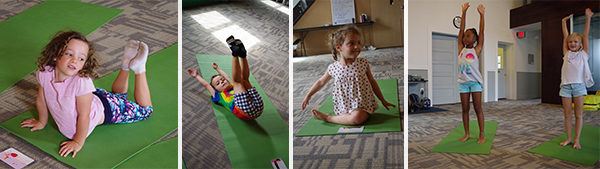
We love our 4-year-old campers, but their needs are very different from those of campers just a couple of years older. 4-year-olds tend to require more one-on-one attention, are slower at transitions, and have shorter attention spans than their older camp counterparts. During school-year day off camps, we limit our 4 year old enrollment to just a couple of younger siblings or returning campers. During the summer, we do the same unless we are offering a full PK/K camp group.
Considerations For Enrolling A Rising PreK or K Camper
We field a lot of questions about camper readiness and sometimes hear concerns from parents about very typical 4 & and 5-year-old behavior.
We are prepared for the typical 5-year-old kindergarten behavior and for 4-year-olds on weeks we enroll PK4. We love them and know they are less focused and have fewer personal management skills than older campers. On the flip side, their behavior issues are typically simpler and far more transparent than those more mature and complex 7-10-year-olds (who have their own charms).
 The following describes a bit about our approach and behavior standards for all campers:
Camp is Different than School or Daycare
Camps, in general, are a bit less structured than schools or daycare environments. Some behavior standards are more relaxed, which generally means campers are allowed to be more talkative and engage in more high-energy and louder play than they would in the typical classroom.
The environment is less predictable than school, a lot of that simply by the nature of there always being new kids and staffing variations. Yoga camp, in particular, intentionally feels less structured and scheduled than many day camps.
Breathing Space consciously incorporates a great deal of free time and fluidity into our schedule.
Unstructured play allows students the choices necessary to develop executive function skills, and undirected camper interactions, with staff guidance as needed, build social and emotional awareness and skills.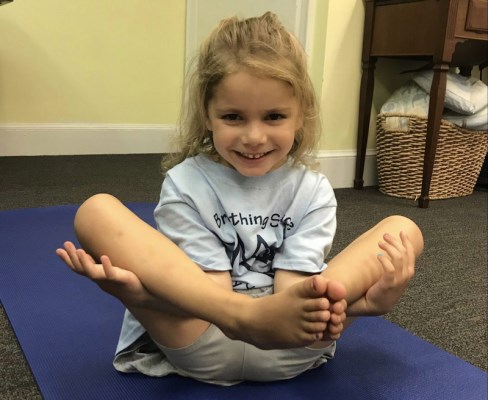
A fluid schedule means we can allow activities to come to their natural stopping point rather than enforcing arbitrary end times. We usually know what we are going to do during the day, but not exactly when we are going to do it.
For example, if the day's timing is flexible, we can extend the yoga class when campers become especially engaged in a game. This will allow them to complete the game while still having time for cool down and relaxation.
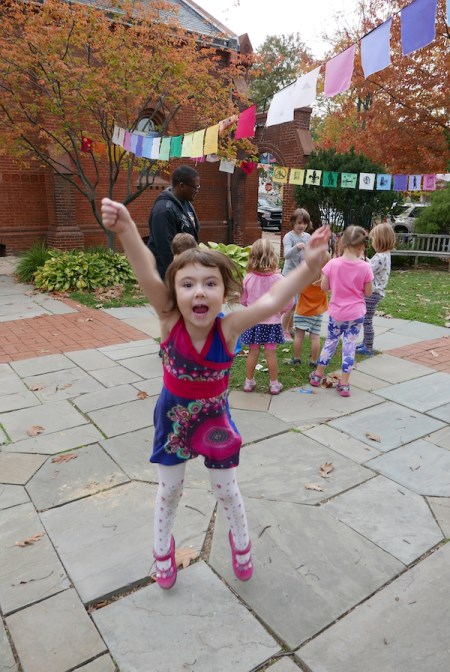 We always set up alternative activities to arts & crafts, so campers who complete a project quickly (or choose not to do it) can engage with something else while others can keep working until they finish.
If campers are playing beautifully at a playground or on an outing, we might let that run over by 10-20 minutes and adjust the rest of the day accordingly.
We often adjust our schedule day by day or during the camp day based on camper moods, how quickly or slowly activities go, and whether we need to respond to individual camper needs.
This flexibility creates a relaxed environment—schedule variations are not a big deal. We also believe that by responding to camper mood and focusing on the activity, not the clock, we help campers find a state of flow that’s good for neurological and emotional development.
 Sensitive Campers
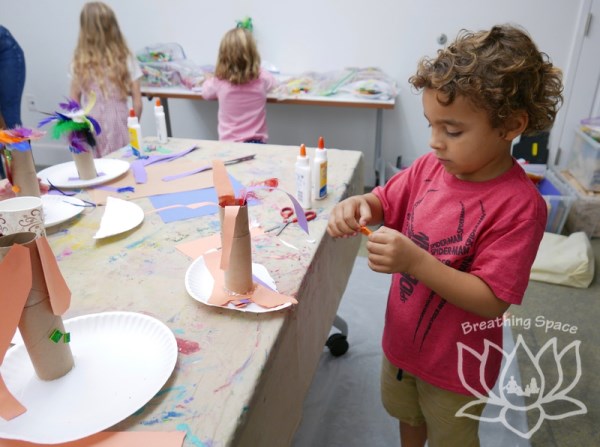
Some children – often younger ones – are much more comfortable in a highly structured environment and may also find the activity and noise level of camp overwhelming.
Transitions can be extra challenging if your camper's expected routines and cues are missing.
If your camper struggles with this, we are happy to give them an extra heads-up about the schedule and work with them to find comfort points within the variation.
Younger campers, however, can’t always understand why they are uncomfortable and may act out or shut down as a response. For some campers, this is manageable with small interventions by staff to give children extra transition attention or a sensory break if they are overwhelmed.
Most of this is routine for us and doesn’t even merit a parent conversation. But you have concerns, we are happy to discuss them and always appreciate knowing what you or school does to help your child have a successful and enjoyable experience in different environments
Camper Readiness & Behavior Expectations
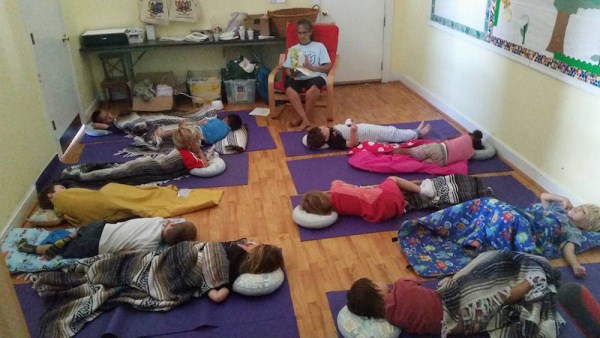 Our camper expectations are age-appropriate and allow for some individual variation. Still, we do require a common level of personal competence and capacity for following directions and observing behavior norms. Even rising PK4 campers – 4 years old by Sept 30 – must meet minimum readiness standards:
- Campers must be able to participate in group activities, either actively or without disrupting other campers without requiring constant one-on-one assistance.
- Campers must be able to engage in freeplay without constant one-on-one supervision to prevent conflict or enforce basic camp rules.
- Campers must be able to stay with the group – they cannot leave the building, playground, or outing group without permission or hide from staff.
- Campers must be able to manage their own belongings with direction.
- Campers must be reliably potty trained and bathroom independent.
- Campers must have the stamina to walk to public transportation and outing destinations – such as from the church to Garfield Park, or from the bus stop on M Street to Yards Park – while carrying their own backpack/lunch.
- PK4 campers should have a year of full-time schooling under their belt.
All campers are expected to follow camp rules and help us keep everyone safe. See our full behavior policy here.
Please Respect our Age Minimum
We base our roster openings on available staffing and in an attempt to balance the age distribution of camp classes.
Overall, our day camps are small – 14-16 kids per group, up to 28 campers total.
For smaller camps (most school year camps and any camp described as K-4th), we must limit the number of younger campers. When we do, we find everyone has fun. The older campers and staff are able to help the little ones keep up during activities and outings while still doing the activities that the older campers enjoy.
When we enroll lots of 4-year-olds, it completely changes the camp dynamic. If we are enrolling more than 16 campers, we typically split into two groups - PK/K-1st, and 2nd-4th - for organized activities. Those are the camps where we may be able to accommodate more 4-year-olds.
Sorry, no PK3
We recognize that it is challenging to find an enriching camp experience for preschoolers, but we need to be sure we are offering a quality experience for all our campers. The needs of a 3-year-old – attention span, interests, verbal abilities, physical coordination, stamina – are very different from those of a 7-, 8-, or 9-year-old. A 3-year-old needs more assistance with nearly all tasks and is unlikely to be able to do – or be interested in – the same craft projects as older campers, pay attention to the same stories, or follow the same game rules . . . . We look forward to enrolling your camper when they get a little older.
Thank you.